
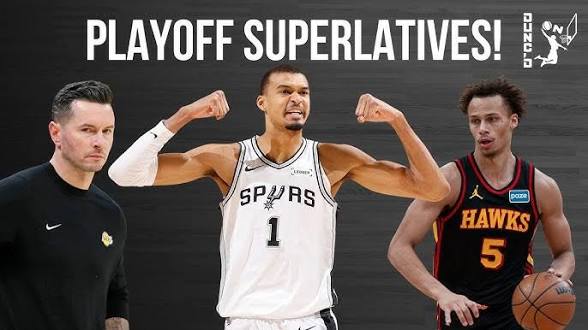
This Monday 8th May, Donald Trump is scheduled to appear at Madison Square Garden for Game 3 of the NBA championship series between the New York Knicks and the San Antonio Spurs. When his image inevitably appears on the Jumbotron or he is spotted in his luxury box, the reaction will likely be swift and harsh. In a city like New York, the boos will be deafening, potentially accompanied by chants far more creative and vulgar than a simple “Trump sucks.”
One has to wonder what Trump expects to gain from this appearance. It is likely that the circle of sycophants surrounding him have assured him that the “people” love him and that any dissenters are merely a handful of “woke Antifa punks” who will be drowned out by cheers.
However, there is also the possibility that Trump welcomes the hostility. He has a history of using sporting events to manufacture political drama. In 2017, he famously dispatched Vice President Mike Pence to an Indianapolis Colts game against the San Francisco 49ers with explicit instructions to stage a mock-outrage walkout when players knelt during the national anthem to protest police violence. More recently, he has stuck to “safe” venues like UFC matches or NASCAR races, where the demographics skew heavily Republican and he can soak up guaranteed adulation.
Yet, as Paul Waldman argues, Trump doesn’t actually understand sports at a fundamental level. Unlike George W. Bush’s genuine passion for baseball or Barack Obama’s deep-seated love for basketball, Trump appears to be a casual fan at best. His interest seems less about the drama of the game and more about the “muscular bodies” of the male athletes—a topic he frequently discusses in vivid, almost fixated terms. While his staff likely keeps him away from anything that might challenge his worldview, his inability to grasp the sociological power of sports is what truly isolates him.
The Power of the Underdog
The current atmosphere in New York is a testament to what sports look like at their best. The Knicks are currently two games away from their first title since 1973. For decades, the fandom has been defined by frustration and disappointment, which only makes this current playoff run more electric.
At their peak, sports transcend the barriers of race, age, and economic class, uniting a community in a shared sense of belonging. In a city heading toward a title, the team logo becomes ubiquitous—on shop windows, t-shirts, and car flags. It turns a game into a collective, uplifting experience. While critics may dismiss sports as a “capitalist distraction,” the reality is that they provide a rare form of human connection. This is why thousands of people—unable to afford the staggering ticket prices that currently range from $3,839 to an eye-watering $161,895—will gather in bars and outdoor watch parties rather than sit alone on their couches.
A Political Divide
This sense of community is something New York’s mayor, Mamdani, has successfully tapped into. By leaning into “Knicks fever,” Mamdani isn’t just engaging in the mundane tradition of betting local delicacies with the Mayor of San Antonio; he is enhancing a brand of civic love.
Trump, conversely, is incapable of this nuance. His logic is transactional: he sees a crowd and assumes their excitement can be harvested for his own ego. This disconnect has led conservatives to declare Knicks fandom a “liberal” pursuit. Ben Shapiro recently voiced this disdain, stating that “for the good of the United States, New York must lose,” simply to prevent left-leaning politicians and fans from celebrating.
If—and when—the Garden crowd boos Trump on Monday, the conservative media machine is already prepared to react. Outlets from Fox News to Newsmax and OAN, along with Elon Musk’s X, will likely frame the booing as the greatest insult ever leveled at the presidency. They will characterize the fans as “sub-human barbarians” and claim the verbal dissent was an act of violence—proof that the left is out of control.
Ultimately, however, this “spoil-sport” attitude will only make the right appear weak and resentful. Trump’s attempt to capitalize on the Knicks’ success is destined to fail because he lacks the capacity to understand the very thing that makes the moment special: a community united by something larger than a single man’s ego.